

Red casino Plinko
Introduction
When I look at Red casino Plinko, I see a format that appears almost too simple to deserve a long analysis. A ball drops from the top of a peg board, bounces left and right, and lands in a slot with a multiplier. That is the whole visual concept. Yet in practice, Plinko creates a very specific kind of tension that many classic casino games do not reproduce in the same way. The simplicity is real, but it hides a surprisingly sharp relationship between probability, pacing, stake control, and emotional response.
That is exactly why Plinko keeps attracting attention. It is easy to understand within seconds, but the actual session experience changes dramatically depending on settings such as rows and risk level. A low-risk setup can feel steady and almost procedural. A high-risk setup can turn the same board into a chase for rare top multipliers with long stretches of modest returns or complete misses. For players in Canada exploring Red casino Plinko, this distinction matters much more than the visual design.
In this article, I will focus strictly on the game itself: how Plinko works, what creates its appeal, how its rhythm differs from slots and other casino games, where the real pressure points are, and what a player should understand before launching a session. My goal is not to oversell the format. It is to explain what Red casino Plinko actually offers, where it performs well, and where expectations need to stay realistic.
What Red casino Plinko actually is and why players notice it so quickly
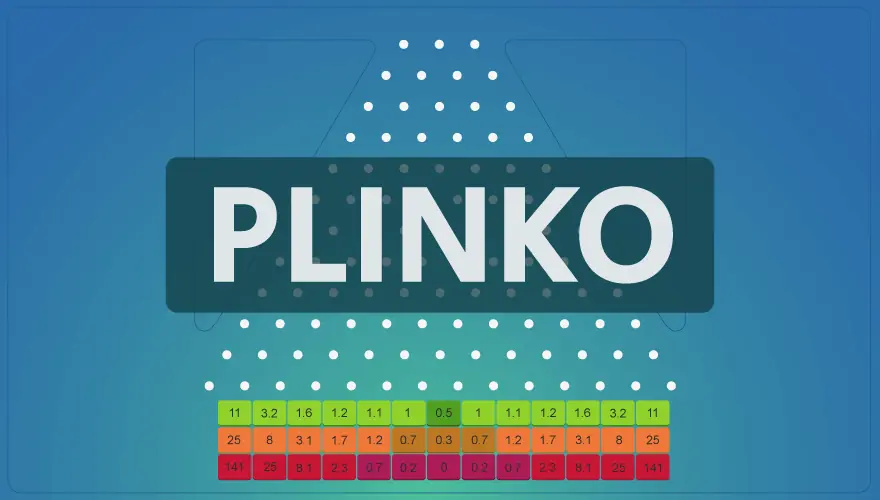
Plinko is a chance-based casino game built around a vertical board filled with pins. The player chooses a stake, often adjusts the number of rows and a risk mode, then drops a ball from the top. As the ball hits each peg, it deflects left or right until it reaches one of the slots at the bottom. Every slot corresponds to a multiplier, and the final result is simply the stake multiplied by that value.
That description sounds basic because it is basic on the surface. But Red casino Plinko stands out for one important reason: the entire result unfolds in front of the player. Unlike a slot spin, where the math is hidden behind reels and symbols, Plinko creates a visible journey from release to outcome. Even though the underlying randomness is still determined by the game engine, the bouncing path gives the session a more tactile and immediate feel.
I think this is one of the most important reasons for its visibility. Players do not just receive a result; they watch uncertainty take shape. That visual descent creates a short burst of suspense every single round. In a standard slot, anticipation often comes from matching symbols or waiting for bonus for Canadian players triggers. In Plinko, anticipation comes from trajectory. The ball looks as if it might drift toward a high multiplier, then suddenly cuts away. That tiny moment of false hope is not a side effect. It is part of the format’s grip.
Another reason the game gets noticed is speed. There are no paylines to study, no card strategy to learn, and no long feature sequences to sit through. Red casino Plinko can be understood almost instantly, which lowers the barrier to entry. At the same time, this accessibility can be misleading. The interface is simple, but the experience is not always casual, especially once players move into high-risk settings.
How the Plinko mechanic works in practice
The core mechanic of Red casino Plinko revolves around three variables: the size of the stake, the board configuration, and the selected risk level. Once these are set, the player drops the ball and waits for it to travel through the peg field. Each collision sends it in a new direction. The final landing zone determines the multiplier applied to the original bet.
From a practical standpoint, the board is usually structured so that center slots are more likely to be reached than the extreme edges. The highest multipliers often sit on the outer ends, while the middle contains lower but more common results. This is the key to understanding the game. The rare outcomes are visually present at all times, but their visibility should not be confused with accessibility.
That difference matters. Many players see a large multiplier on the edge and instinctively feel that the ball has a reasonable chance of reaching it because the path appears open. In reality, the distribution is shaped so that central landings occur more often. Plinko is not about aiming. It is about accepting a weighted spread of outcomes.
The number of rows also affects the experience. More rows usually mean more deflections before the ball lands, which increases the sense of suspense and can broaden the range of possible outcomes. Fewer rows produce a shorter drop and a more compact session rhythm. Neither is automatically better. The choice changes how long each round feels and how sharply the result distribution can spread.
| Setting | What it changes | What it means for the player |
|---|---|---|
| Bet size | Monetary value of each drop | Directly affects bankroll pressure and emotional intensity |
| Rows | Length and complexity of the ball path | Changes session rhythm and often the spread of outcomes |
| Risk level | Multiplier distribution across the board | Alters how often small returns appear versus rare large hits |
One of the most useful ways to read Red casino Plinko is to stop thinking of it as a board game and start thinking of it as a volatility control panel with a visual layer. The board is the presentation. The real decision sits in how the player configures the payout curve.
Why risk level changes the entire session experience
Risk level is not a cosmetic option in Plinko. It is the setting that most strongly defines how the game feels over time. On low risk, the board is usually arranged to produce more frequent modest multipliers and fewer dramatic spikes. This can create a smoother session where the bankroll declines more gradually, or occasionally stabilizes through regular smaller returns.
On medium risk, the balance starts to shift. The game still offers some consistency, but the spread between common and uncommon outcomes becomes more noticeable. This is often the setting where players begin to feel the push and pull that makes Plinko engaging without turning every round into a long-shot chase. Anyone stuck on account verification can follow the steps laid out in Red Casino iOS casino app for iPhone players.
High risk is where Red casino Plinko changes character. The top multipliers become more attractive, but the route to them becomes harsher in practical terms. The player may see long sequences of weak returns, interrupted by the occasional meaningful hit. This can be exciting, but it also creates a distorted sense of proximity to large outcomes. Because the board always displays those premium multipliers, the session can feel as if a big result is always one bounce away. Statistically, that feeling should be treated with caution.
Here is the practical takeaway: in Plinko, risk level does not just affect how much you can win. It affects how often the game gives you emotional reinforcement. That is a major distinction. A low-risk board tends to acknowledge your participation more often. A high-risk board often asks for patience, discipline, and acceptance of dry stretches.
- Low risk usually suits players who prefer frequent feedback and less violent swings.
- Medium risk can work for players who want a balance between rhythm and upside.
- High risk is better understood as a variance-heavy mode where long quiet stretches are part of the design, not a sign that the game is “due.”
What creates the appeal of Plinko beyond its simple interface
I would separate the appeal of Red casino Plinko into three layers: visual suspense, immediate control, and compressed decision-making. These are not abstract marketing points. They directly affect how a real session feels.
First, the visual suspense is unusually clean. The player sees one object, one path, and one destination. There is no clutter. That makes every bounce readable. A small but memorable detail here is that Plinko often produces “near-miss emotion” without using classic slot-style near-miss presentation. The ball can drift toward a high multiplier lane and then fall away at the last second. The result is technically ordinary, but psychologically it feels dramatic.
Second, the control is immediate. Players can adjust stake size, change the board, switch risk mode, and often trigger repeated drops quickly. This creates a sense of direct authorship over the session, even though the outcome of each drop remains random. That mix is powerful: the player controls the setup, but not the path.
Third, the decisions are compressed. In a slot, choice is often limited once the spin begins. In Red casino Plinko, the meaningful decision happens before the drop. After that, the result resolves fast. This pre-drop tension is one of the format’s strongest hooks. It makes the game feel active even though no skill can steer the ball.
One observation I keep returning to is this: Plinko is one of the few casino formats where the session can feel calm and nerve-racking at the same time. The screen is minimal, the action is short, and yet every drop creates a brief internal argument between logic and hope.
Understanding probabilities, expected outcomes, and real session rhythm
Before playing Red casino Plinko, it is important to understand what probability looks like here. The board may appear symmetrical, but the result distribution is not experienced as evenly as the visuals suggest. Outcomes near the center are generally more common. Extreme multipliers sit at the edges and are usually much less frequent. This is the structural logic behind the game.
That means players should not evaluate Plinko based on a handful of drops. Short sessions can be wildly misleading. A player might hit a strong multiplier early and assume the format is generous, or miss repeatedly and conclude that the game is cold. Neither judgment says much. The game is built on repeated random events shaped by a predefined payout map.
Another point worth stressing is that frequency of action can distort judgment. Because rounds resolve quickly, players can place many drops in a short period. Fast resolution creates momentum, and momentum can hide bankroll erosion. This is especially true when the interface allows auto-play or rapid manual repetition. On paper, each drop may seem small. In practice, session cost can build faster than many players expect.
To keep expectations realistic, I recommend viewing Red casino Plinko through three questions:
- How much volatility am I choosing with this setup?
- How many drops can my bankroll reasonably support?
- Am I reacting to actual results, or to the visual drama of the ball path?
That third question is more important than it looks. Plinko can create a strong illusion of narrative. A ball that almost reaches a high multiplier feels meaningful, but it has no predictive value for the next drop. The board tells a story with every bounce, yet each round remains independent.
| Session factor | Common player impression | More accurate reading |
|---|---|---|
| Frequent center landings | The game is playing safe today | Common-result zones are usually designed to appear more often |
| Several weak drops in a row | A big multiplier must be close | Past outcomes do not force a rare result to appear next |
| One large hit early | This setup is highly profitable | Short-term variance can flatter any configuration |
| Fast rounds | Low effort, low pressure session | Speed can increase total spend before the player notices |
How Red casino Plinko differs from slots and other casino games
The most obvious difference between Red casino Plinko and classic slots is the absence of reels, paylines, symbol combinations, and bonus rounds in the traditional sense. Slots often rely on layered systems: scatter triggers, expanding symbols, free spins information inside Red Casino for detailed casino comparison, multipliers within features, and themed presentation. Plinko strips most of that away. It replaces complex presentation with a single-event outcome.
This has two consequences. First, the game becomes easier to read. Players do not need to learn a paytable full of combinations. Second, the emotional pattern changes. Slots often build tension through delayed rewards and feature anticipation. Plinko creates micro-tension every few seconds instead. It is less about waiting for a bonus and more about repeating a compact suspense cycle.
Compared with roulette, Plinko shares the appeal of simple input and immediate result, but the visual resolution is more dynamic. Compared with Red Casino blackjack and casino rules, there is no strategic depth in the classic sense. Compared with crash-style games, Plinko feels less confrontational and more observational. The player releases the ball and watches rather than timing an exit.
That makes the format especially distinct for players who want randomness without heavy interface complexity. At the same time, anyone who enjoys layered bonus systems, evolving rounds, or strategic decision trees may find Red casino Plinko too narrow after a while.
A useful summary is this: slots often reward patience with occasional feature-rich sequences; Plinko rewards attention with repeated, short suspense bursts. Those are very different entertainment models.
Where the game performs well and where its limits show
Red casino Plinko has clear strengths, but those strengths come with equally clear boundaries. I think it works best when a player wants fast understanding, direct setup control, and a transparent result structure. The game does not bury the outcome behind symbols or long animations. You place the drop, watch the path, and get the multiplier. That clarity is one of its best qualities.
Another strong point is flexibility of tone. By adjusting risk level and board depth, the player can make the session feel steadier or more aggressive. Not every casino format allows such a visible shift in personality without changing to a completely different product.
Still, the limitations are real. Plinko can become repetitive faster than slots for some users because the core loop rarely changes. There are no expanding systems of discovery, no feature maps, and no evolving round structure. If a player needs variety inside the session itself, the game may start to feel one-note.
There is also a practical weakness in how easy it is to underestimate variance. Because the interface looks clean and almost casual, some players approach Red casino Plinko with less caution than they would bring to a high-volatility slot. That can be a mistake. High-risk Plinko can be punishing in a very efficient way.
One more observation stands out to me: Plinko often feels friendlier than it really is. The board looks playful, the motion is smooth, and the rules are simple. But underneath that approachable shell, the session can turn expensive quickly if the player confuses visual simplicity with low exposure.
Who Plinko is likely to suit, and who may prefer another format
Red casino Plinko is a good fit for players who value immediacy. If you like games that explain themselves fast, deliver results quickly, and let you adjust the tone of the session through a few clear settings, this format has real appeal. It can also suit players who enjoy watching probability unfold visually rather than through cards, reels, or static number fields.
It is also a sensible choice for players who prefer short sessions. Because each round resolves quickly, it is possible to test the format, evaluate the feel of different risk modes, and step away without committing to long feature cycles.
On the other hand, players who want strategic influence may find Plinko too passive. Once the ball is released, there is nothing to do but watch. Players who enjoy narrative progression, bonus hunts, or feature-heavy slots may also feel that the format runs out of surprises too soon.
I would be especially cautious recommending high-risk Red casino Plinko to anyone who tends to chase rare outcomes. The game can amplify that impulse because the largest multipliers are always visible and always tempting. Visibility is not probability, and that distinction needs to stay front of mind.
What to check before starting a Red casino Plinko session
Before launching a session, I suggest treating Red casino Plinko less like a novelty and more like a structured probability product. A few checks make a real difference.
- Review the risk setting first. Do not begin on high risk just because the top multipliers look attractive. Start by understanding how often the board returns smaller results.
- Set a drop budget, not just a money budget. Because rounds are fast, deciding on a maximum number of drops can be more useful than watching balance alone.
- Pay attention to rows and pacing. More rows can increase suspense, but they can also make you linger emotionally on each result and overinterpret the path.
- Use demo mode if available. This is one of the few formats where a short demo session can genuinely teach you how different settings feel in practice.
- Do not read patterns into the bounce path. The visual journey is compelling, but it should not be mistaken for a trend signal.
These points may sound basic, yet they address the most common misunderstanding around Plinko: players often focus on what the ball looked close to doing, rather than what the payout structure is designed to do over time.
Final verdict on Red casino Plinko
Red casino Plinko offers a very specific kind of casino experience. It is not trying to compete with slots on theme depth or bonus complexity, and it does not provide the strategic texture of table games. What it does offer is cleaner than that: a fast, visually readable, probability-driven format where the main decision is how much variance you are willing to accept before each drop.
Its strongest qualities are accessibility, pace, and the unusual tension created by watching the ball descend through a simple board that can still produce very different session profiles. That contrast is the heart of the game. It looks straightforward, but the actual feel can range from steady and controlled to sharp and swing-heavy depending on the chosen setup.
The caution point is just as clear. Red casino Plinko can encourage overconfidence because it seems transparent and harmless at first glance. In reality, the combination of fast rounds, visible top multipliers, and adjustable high-risk modes can create a demanding session if the player is not disciplined.
So, is it worth trying? Yes, if you want a compact chance-based format with immediate feedback and clear configuration choices. But it suits a particular mindset. Players who enjoy short suspense cycles, simple interfaces, and visible probability in motion are likely to appreciate it. Players who need strategic agency, deeper progression, or stronger variety inside each session may be better served by another format. If bonuses are what you care about, Red Casino legality review breaks down every offer currently running.
In the end, Red casino Plinko is not interesting because it is simple. It is interesting because it turns that simplicity into tension, speed, and sharply different risk profiles. That is what the game really offers, and that is what a player should evaluate before pressing drop.
FAQ
How does the Plinko ball drop work in the live game format on Red?
A ball is released from the top and falls through pegs into scoring slots at the bottom. Each slot has its own multiplier, so the final landing position determines the result. The pace is fast, which keeps rounds moving even during casual play.
What determines the multipliers in Plinko, and do they change during a session?
Multipliers are tied to the bottom scoring slots. The values shown for each slot apply across the game layout for that session. Results are determined by the ball’s physics path, not by the previous round.
Can Plinko be played in demo mode or real-money play, and what changes between them?
Demo mode uses virtual credits and is meant for practice without affecting account funds. Real-money play uses balance from the player’s casino account. The rules and scoring layout stay consistent so switching is straightforward.
How does the bonus balance or bonus-funded mode impact Plinko gameplay and round limits?
When a promotional balance is active, Plinko rounds may draw from that balance based on the promotion rules. Some bonuses include conditions like eligible game selection, wagering requirements, or restricted withdrawal timing. Always verify the active bonus details near the cashier area before starting.
What verification or account checks are needed before using withdrawal options after playing Plinko?
Withdrawal access may require completing account verification steps. Prepare common details like identity information and ensure the name and contact details match the account. If a withdrawal is blocked, the cashier usually shows what is still needed.
When switching between a working mirror and the main site, will Plinko game progress or settings carry over?
Game progress tied to an active round is not guaranteed across different access routes. Bet settings can reset when the session restarts, so the wager should be checked again before dropping the next ball. After switching, open Plinko again and confirm the current mode and table options.